
You Can't Do It All (And You Shouldn't Try): Hiring Help for Valentine's Day (part 1)
PART 1 of 2
This one ended up longer than I expected, so I’ve split it into two parts. Today covers hiring different roles. Tomorrow we’ll go over the paperwork.
We've covered organizing your shop and streamlining your orders. Now it's time to talk about the people who'll help you execute. Because even the best systems fall apart if you don't have the right people in the right roles. Let's break down who does what, how to choose the right help, and how to set everyone up for success.
Check out part 1: Get Your Studio Ready
Check out part 2: Design Smart, Not Hard
Check out part 3b: You Can’t Do It All
Check out part 4: Flying Solo on Valentine’s Day
Let's be honest: you can technically do everything yourself. You can take every order, design every arrangement, route every delivery, package every vase, write every card, load every car, and drive every route.
But here's what that actually looks like: you'll be slower at each task because you're constantly switching gears. You'll make more mistakes because you're exhausted. You'll take fewer orders because there's only so much one person can do in 24 hours. And by February 15th, you'll be so burnt out that you'll need a week to recover.
(Don’t worry - we’ll cover this tomorrow.)
After three decades in this business, I've learned that the florists who scale successfully aren't the ones who can do everything. They're the ones who figure out what they're best at and hire help for the rest. They know that hiring help isn't an expense. It's an investment that allows them to serve more customers, create better work, and actually enjoy the holiday instead of just surviving it.
This isn't about admitting defeat or acknowledging that you can't handle the pressure. It's about working smarter. It's about recognizing that your time and energy are finite resources, and the way you allocate them determines whether you just get through Valentine's Day or whether you truly thrive during it.
The goal is to create a system where everything gets done well, and you're positioned exactly where you add the most value.
Figure Out Where You're Most Useful

Before we dive into specific roles, let's address something important: deciding who does what on your team isn't just about filling positions. It's about understanding how each role connects to the others and where you fit into that puzzle. When you're clear about what each person handles and how their work flows to the next person, you create a team that operates like a well-oiled machine.
The secret to a smooth Valentine's Day is having the right help in the right places, with everyone knowing exactly what they're responsible for.
Let’s dive in!
What do you do best?
Think about where you add the most value. Are you brilliant at design but terrible at juggling logistics? Or are you better at keeping everything organized while someone else handles the creative work?
If you're the creative genius, hire someone to manage operations while you focus on design. If you're the organized one, hire designers and keep the whole machine running.
There's no right answer. Just the answer that's right for you.
Your Checklist:
Decide where you’re most valuable
what you do best
List what drains your energy
Identify which role you should keep
Review your team & assign roles for the holiday
Hire freelancers for the remaining jobs
Taking Orders: The Easiest Critical Role to Hire
Why This Role Matters More Than You Think
The person answering your phone isn't just taking orders. They're creating first impressions, setting expectations, and directly impacting your revenue.
A confident order-taker who knows your products and understands value will naturally upsell and guide customers toward better choices. A hesitant one who's unsure about pricing will inadvertently steer customers toward your cheapest options.
The difference between these two scenarios can mean thousands of dollars over Valentine's week.
The good news? This is one of the easiest roles to train for, and you don't need someone with floral experience. You just need someone who can follow a system, stay calm when the phone rings nonstop, and understand that your arrangements are worth what you're charging. Here's exactly how to set them up for success.
Arm them with a list of your specials and include
A short description of the arrangement
Highlights about the arrangement (ex: featuring garden roses)
Price and upgrade options
Include photos for reference.
Give them your order form (pen & paper or POS system)
Walk them through it the system until they are comfortable with the system & the holiday specials
Don’t forget the add-ons! This can be a significant source of holiday income

Your Checklist:
Find someone who understands value (not a bargain hunter), is comfortable speaking with customers, and can handle a fast pace.
Create a list of your specials with details and photos. (You can print off your online product pages)
Provide a list of add-on items.
Print order forms if using paper. Set up user on POS if using a computer system.
Train on your pricing and offerings
Do a practice call together (or get a friend to call)
Organizing & Routing: The Role That Needs Special Skills
Why This Role Needs Special Attention
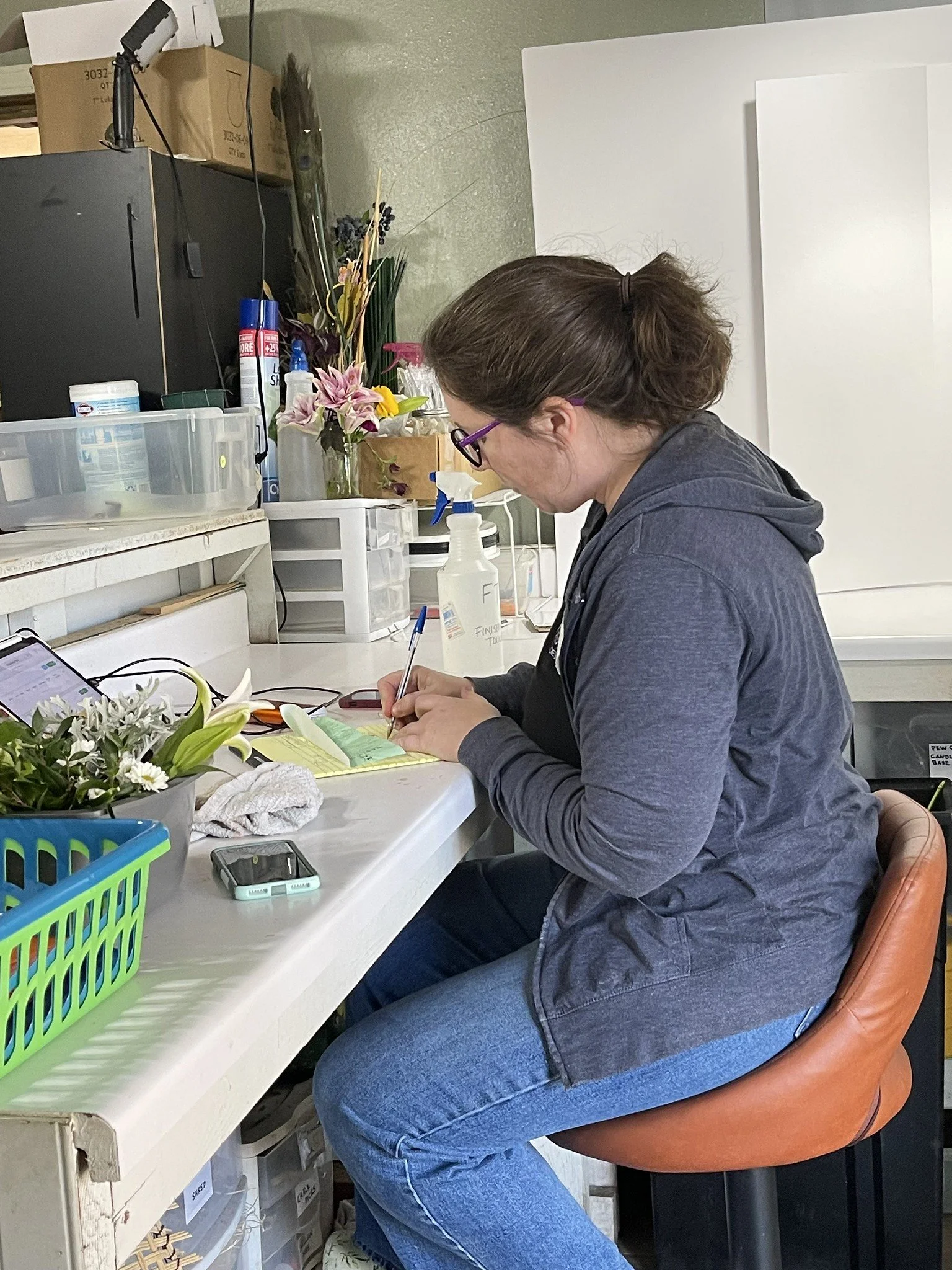
If your order-taker is the front door of your business, your organizer and router is the central nervous system. This is the person who keeps everything flowing smoothly between orders coming in, arrangements being made, and deliveries going out. They're tracking what's been designed, what's waiting, what needs to go out next, and where everyone is at any given moment.
When this role is done well, your entire operation hums. When it's not, everything backs up and chaos follows.
If you're the kind of person who naturally sees how all the pieces fit together, who can mentally juggle twelve things at once without breaking a sweat, and who actually enjoys keeping everything organized—congratulations, you've found your spot. Lean into it. This is where you shine.
But if staying organized feels like wading through mud, if you'd rather be elbow-deep in flowers than coordinating logistics, don't force it. Trying to manage operations when it's not your strength will drain you faster than anything else during Valentine's week. Find someone who genuinely loves this kind of work and let them run with it. You'll both be happier, and your business will run smoother because of it.
What Makes a Great Organizer/Router?
Not everyone can do this job well. Here's what to look for:
They stay calm under pressure: When five people are asking questions at once and the phone won't stop ringing, they don't panic. They prioritize, make decisions, and keep moving forward.
They can hold multiple timelines in their head: They know what needs to go out by 10am, what's scheduled for noon, and what can wait until 3pm—all while tracking what's being designed right now.
They communicate clearly: They can give quick, specific instructions without being confusing.
They see problems before they become emergencies: They notice when a delivery area is getting backed up, when you're running low on a specific flower, or when a designer is falling behind schedule, and they adjust before it becomes a crisis.
They genuinely enjoy organization: This is key. The right person gets satisfaction from seeing everything flow smoothly. They enjoy the puzzle of fitting all the pieces together efficiently.
What They Need From You
Even the best organizer needs proper setup. Here's what you must provide:
A clear system for tracking orders: one place to see what's been designed, what's in progress, and what's waiting.
Defined delivery windows: They can't route efficiently if delivery times are vague. "Morning deliveries by noon, afternoon deliveries by 5pm" gives them clear targets to work toward.
Authority to make decisions: When a designer asks "should I make this next?" or a driver asks "should I take this batch now?", your organizer needs to be able to answer without checking with you every time.
Access to all the information: They need to know which orders are rushes, which recipients have special delivery instructions, and which customers paid extra for specific time slots.
Your trust: This is the hardest part for many florists. You have to trust them to make judgment calls without micromanaging. If you're constantly second-guessing their decisions, you're not actually delegating; you're just adding an extra step to your own process.
Training Your Organizer/Router
This role requires more training time than any other position. This training needs to happen before the holiday! Here's what to cover:
Walk them through your entire workflow: Show them how orders come in, how they get to designers, how arrangements get prepped for delivery, and how deliveries get batched and routed. They need to understand the whole picture, not just their piece.
Teach them your routing system: Whether you use delivery software, Google Maps, or AI, make sure they're completely comfortable with the tools. Have them practice routing several batches while you watch.
Review your priority system: Explain how you handle rushes, guaranteed time deliveries, and regular orders. Make sure they understand which orders take precedence when everything feels urgent.
Show them your communication style: Do you text updates? Call out across the shop? Use a group chat? However you communicate, make sure they're comfortable with it and know when to loop you in versus handle something themselves.
Practice a mock Valentine's Day: Give them a stack of fake orders with different delivery times and addresses. Have them organize, prioritize, and route them while you observe. This reveals any confusion before it matters.
Your Checklist:
Identify team members who can stay calm under pressure and handle multiple priorities simultaneously
If you don’t have a team member for this role, you’ll need to hire someone for the holiday.
Define delivery windows (e.g., morning by noon, afternoon by 5pm) and cutoff times for each (e.g., a specific number of orders or no same-day deliveries)
Train on complete workflow: order intake → design → prep → delivery routing
Practice routing deliveries using your chosen tools (delivery software, Google Maps, or AI)
Review priority system for rushes, guaranteed times, and regular orders
Establish communication protocols (texts, calls, etc)
Run mock Valentine's Day scenario with fake orders to test their process
Ensure they have access to all order details including special instructions and time slots
Delivery: Teams Are More Efficient Than Solo Drivers
The Two-Person Team Advantage
The delivery is the moment where all your design skill, your attention to detail, and your brand promise either land beautifully or fall apart.
It’s tempting to think that more delivery drivers means you’ll get more delivered. After all, more cars means more arrangements out the door. However, a delivery team with a driver an a runner can actually be more efficient. This is especially true if you have areas where parking is hard to find, or when drivers aren’t familiar to the area.
It's much more efficient to have two people per car: a driver and a runner. The runner doesn't worry about parking. The driver maps the next order while the runner is at the door. They keep each other on schedule.
It’s also safter. Having a second person in the vehicle means someone other than the drive can update maps, answer calls and texts, and contact recipients. And, if things get extra busy, the team can be split for an emergency delivery.
Your Checklist:
Talk to insurance company NOW about insuring temporary drivers and the use of personal vehicles
Hire driver and runner pairs if possible
Get copies of drivers licenses for insurance (before the holiday rush)
Write out delivery instructions
How to hold arrangements when presenting to the recipient
What to say when contacting recipients
When it’s acceptable to leave an arrangement if the recipient isn’t available
What to do if there is an issue with delivery (e.g. return to the shop or make repairs in the field, who to tell when they return, etc)
What to do when they return to the shop (how to log deliveries, what to do with undelivered arrangements)
Review delivery instructions with the drivers. Don’t assume they know what to do!
Create backup delivery person list
Designers: The Hardest Role to Delegate
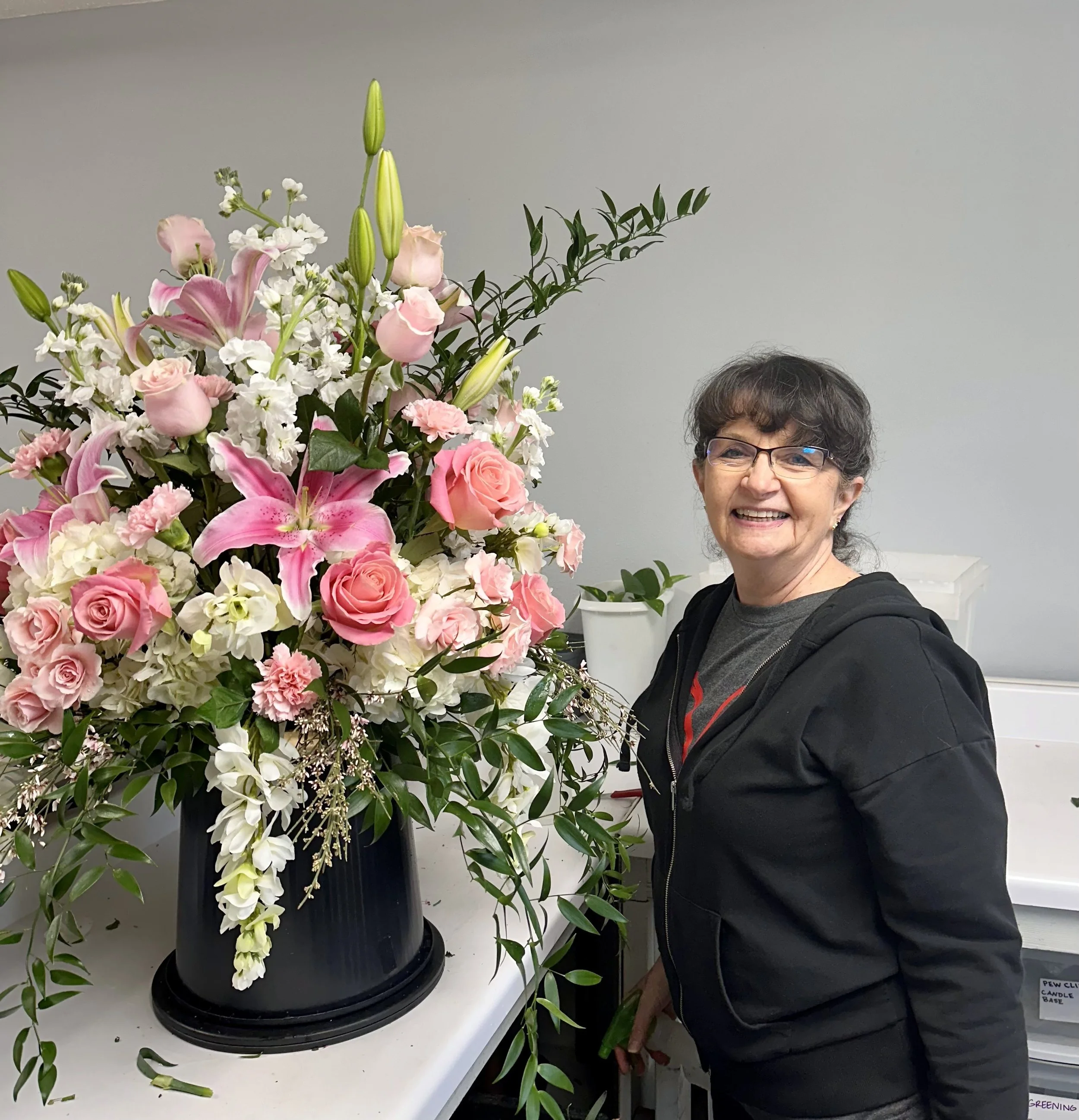
Let's be honest: this is the role you're most afraid to delegate. And for good reason. Design is where your artistic vision meets customer expectations. It's where your brand identity lives. It's the part of your business that feels most personal, most yours. Handing someone else a bucket of flowers and trusting them to create something that represents your shop? That's terrifying.
But here's the reality: if you have 200 Valentine's Day orders and you're the only designer, you physically cannot make them all. The math doesn't work. Even if you're fast, even if you work 20-hour days, you'll hit a wall. And when you're exhausted, rushing, and stressed, your quality suffers anyway.
So the question isn't whether you should delegate design; it's how to do it in a way that maintains your standards. You can still set the creative direction, approve designs, and ensure everything meets your standards without being the one physically making every arrangement.
What to Look For in a Designer
If you're hiring a designer, here's what actually matters:
Technical skill matters, but style compatibility matters more: A designer might have impressive portfolio pieces, but if their aesthetic doesn't match yours, you'll spend all your time correcting their work instead of leveraging their talent. Look for someone whose natural style aligns with what you already create.
Speed and consistency under pressure: Valentine's Day isn't the time for slow, meditative design work. You need someone who can create beautiful arrangements quickly and maintain quality even when they're making their 50th dozen roses of the day.
Ability to follow recipes without losing artistry: Your designer needs to understand that Valentine's Day arrangements often follow specific formulas for pricing and consistency. They should be able to work within those parameters while still making each arrangement feel special.
Problem-solving skills: When you run out of red roses at 2pm on Valentine's Day, can they pivot to a beautiful alternative without panicking? Can they make substitutions that customers will love rather than tolerate?
Ego that fits the situation: You need someone who can take direction without getting defensive. This isn't the time for artistic temperament. You need a team player who understands that Valentine's week is about volume, consistency, and customer satisfaction, not creating their personal masterpiece every time.
Training Your Designer
Don't wait until February 13th to train your designer. Here's what they need to know well before Valentine's week starts:
Your specific recipes and formulas: Show them examples of your designs. If time allows, have them practice these until they can recreate them consistently.
Your pricing structure and value expectations: They need to understand what a $75 arrangement should contain versus a $150 arrangement. Walk them through your pricing tiers so they know how to make each price point feel appropriately valuable.
Your recipes should handle 90% of this!
Your shop's organizational system: Where are supplies kept? How do you label arrangements? What's your system for marking which orders are complete? These logistics matter as much as design skill when you're making hundreds of arrangements.
Your quality standards and common mistakes: Show them examples of what's acceptable and what's not. Being specific about your expectations prevents problems later.
How to handle special requests and substitutions: Valentine's Day always brings unexpected requests and supply shortages. Train them now on how to handle this so they're not stopping to ask you every five minutes during the rush.
Managing Multiple Designers
If you need more than one designer (and if you are handling the organizing and routing roles, you will), here's how to set them up for success:
Assign clear roles based on skill level: Your most experienced designer should handle custom orders and premium arrangements.
Create a production line approach for high-volume items: Have designers make multiples of each arrangement. It’s faster than constantly switching designs. Have an assistant prep all the flowers (strip roses, fill vases, arrange greens) while another person does final assembly. This assembly-line approach is much faster than having each designer complete arrangements from start to finish.
Designate one person as quality control: This might be you, or it might be your most experienced designer. Someone needs to do final checks before arrangements go out. Catch problems at the bench, not when customers call to complain.
Set production goals that are challenging but realistic: If your designer can comfortably make 10 arrangements per hour, don't push them to make 20. They'll burn out, quality will suffer, and you'll spend more time fixing mistakes than you saved by rushing. Keep in mind, more complex designs will take more time.
Create a communication system for questions: Designers will have questions. Decide now how they should ask them. Will you designate specific check-in times? Should they text you? Call across the shop? Having a system prevents constant interruptions while ensuring important questions get answered.
The Quality Control Question
How do you ensure quality without micromanaging every arrangement? The answer is strategic quality control.
Do random spot checks rather than inspecting every single piece. Pull aside every 5th or 10th arrangement for a quick review. This catches problems without creating a bottleneck.
Address issues immediately with specific feedback: "These roses need to be opened more" or "This arrangement feels too tight. Let the flowers breathe."
Focus your attention on the arrangements that matter most: premium orders, deliveries to businesses where presentation is critical, arrangements going to your regular customers. Standard dozen roses to residential addresses need to be good, but they don't need your personal artistic approval.
Trust your training. If you trained your designer well and they've demonstrated competence, trust them during the actual rush. Constantly second-guessing their work tells them you don't actually trust them, which kills their confidence and slows them down.
What If You Can't Find a Good Designer?
Sometimes you can't find someone whose skills match your needs. Or you can find someone with potential but not enough experience to handle Valentine's Day volume solo. Here are your options:
Scale back your order capacity. If you can't confidently produce 200 arrangements with your available team, cap your orders at 150. It's better to do fewer orders beautifully than take on more than you can handle and disappoint customers.
Simplify your design offerings. If you don't have experienced designers, create beautiful but simpler arrangements. A stunning all-rose arrangement in a sleek vase is better than an attempted mixed arrangement that looks chaotic because the designer doesn't have the skill to pull it off.
Hire for prep work instead of design. Find someone who can strip roses, cut stems, prep containers, and organize supplies. This frees you up to focus purely on design, which can dramatically increase your production speed.
Partner with another florist. If someone you trust is looking for extra work or has excess capacity, explore whether you can send overflow orders to them or bring them in as a contract designer for the week. Just make sure their style matches yours.
Your Checklist:
Assess if you should design or manage
Review portfolio and style compatibility
Print out recipes for each holiday special (include a picture)
Train temporary designers on your recipes, pricing and substitution policies
Show where supplies are kept
Establish quality control check-ins
Set daily production goals
Next up: The Admin side of hiring for the holiday.
