
Design Smart, Not Hard: Recipes, Pricing & Studio Flow for Valentine's Day
You've got your studio prepped and organized. Now let's talk about the systems that make production day actually work.
This is where creative florists often struggle. You're an artist, not operations manager. But here's what I've learned in 32 years: the right systems don't stifle your creativity. They protect it by handling the boring stuff so you can focus on what matters.
Check out part 1: Get Your Studio Ready
Check out part 3a: You Can’t Do It All
Check out part 3b: You Can’t Do It All
Check out part 4: Flying Solo on Valentine’s Day
Retail Pricing the Flowers: Know Your Numbers
Create a retail price list for all the flowers and foliage you’ll have during the week of Valentine’s. Once your order is placed with your wholesaler, you’ll know what’s coming. This reduces the mental load for you designers and is especially helpful if you have temporary helpers. If you don't have final prices yet, start the list now so it's easier to fill in later.
Print it out or use a whiteboard where everyone can see it.
Your Checklist:
Create a retail price list for all flowers and foliage
Print a copy for each designer or display on whiteboard
Recipes: Your Production Lifeline
Floral recipes are critical for a smooth holiday. And using the correct pricing formula means you actually make a profit. Recipes also prevent overstuffing. This isn't the time to guess or undercharge because you're tired or because the arrangement needs ‘just one more rose.’
Create your recipes now. If you already have recipes, double check that they work with the holiday pricing. It’s not uncommon for prices to be significantly higher at Valentine’s Day.
Print out your recipes with sample photos for each designer, especially temporary helpers.
Not a recipe person? Think about how you typically design. You probably gravitate toward a consistent style. Maybe you always use focal flowers, medium flowers, dancing flowers, and just touches of foliage with no filler.
Your recipe could be as simple as:
Small Arrangement = 1 focal, 3 medium, 5 dancing, 1 foliage.
Medium Arrangement = 2 focal, 5 medium, 8 dancing, 2 foliage.
Large Arrangement = 3 focal, 7 medium, 12 dancing, 3 foliage.
That's it. You don't need complicated formulas. You just need consistency so you're not reinventing every arrangement.
Your Checklist:
Create recipes for each price point using the correct pricing formula
Include sample photos
Print for each designer station
Keep recipes simple and clear
Studio Layout: Think Flow, Not Just Space
When arranging your space for a busy time with extra people working in it, think about flow and noise. You want minimal back-and-forth and crossover. For example, don't put the phone and computer in the middle of the packaging area or next to the radio. Sounds obvious, but I've seen it happen when people are setting up in a hurry.
Wherever possible, set up your studio so people aren't constantly crossing paths or backtracking for supplies. If your space is too small, do your best.
Your Checklist:
Map out your order flow path
Keep phone/computer away from high-traffic areas
Minimize crossover between workstations
Position packaging area near delivery staging
Set up design stations with supplies nearby
Test the flow before production day
Delivery Materials: Emergency Kits Save the Day
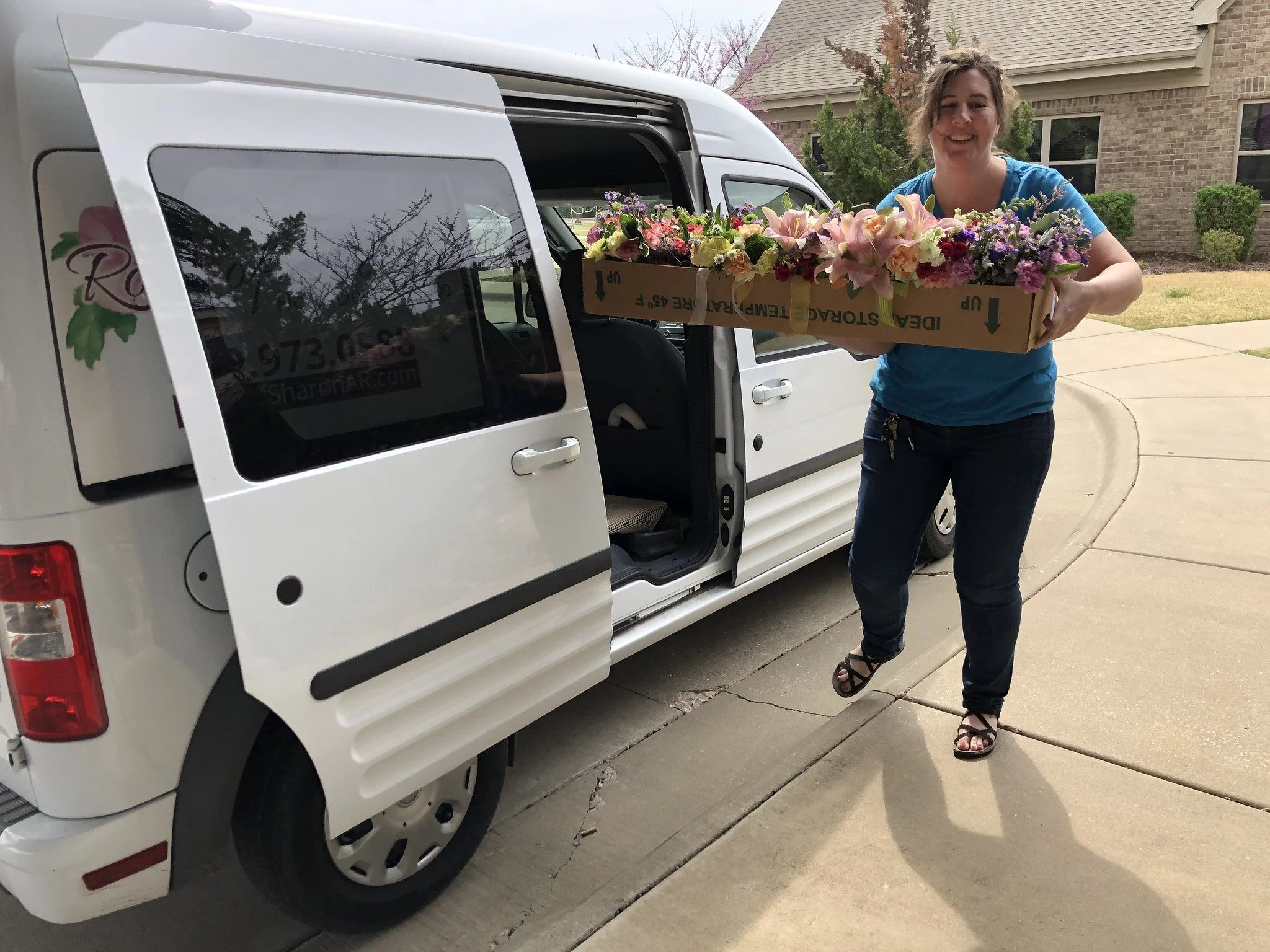
Make it easy on your drivers. Provide them with everything needed for a perfect delivery. You don't want drivers coming back because a card got wet or they forgot a pen!
Put together emergency kits for each delivery person with extra enclosure cards, a bottle of water for spills, towels, pens, and cardettes.
Get your delivery system prepared. Clean crates and totes. Make sandbags if needed. Cut holes in boxes for arrangements. Whatever method you use, make sure it’s in good condition and you have extra capacity
Your Checklist:
Assemble emergency kits (cards, water, towels, pens, cardettes)
Clean crates and totes,
Make sandbags (if needed)
Cut holes in delivery boxes
Stock each vehicle with emergency supplies
Delivery Instructions: Write It Down
If you have specific delivery protocols, write them out and print them now.
This can include
How to hold an arrangement
How to pack an arrangement for delivery
How to drive to avoid spilling or breaking something
Whether to call the recipient or not before delivery
What to say when calling a recipient
When it's okay to leave an arrangement if the recipient isn’t home
What to do if no one's home.
Don't assume temporary helpers know this stuff. Clear written instructions prevent problems and phone calls mid-route.
Your Checklist:
Write delivery protocol document
Print copies for each driver
Review instructions with team before first delivery
Routing: The System That Prevents Chaos
If you have a POS system with routing, use it! If not, Google Maps works great. You can enter up to 8 addresses and drag them around to find the most efficient order.
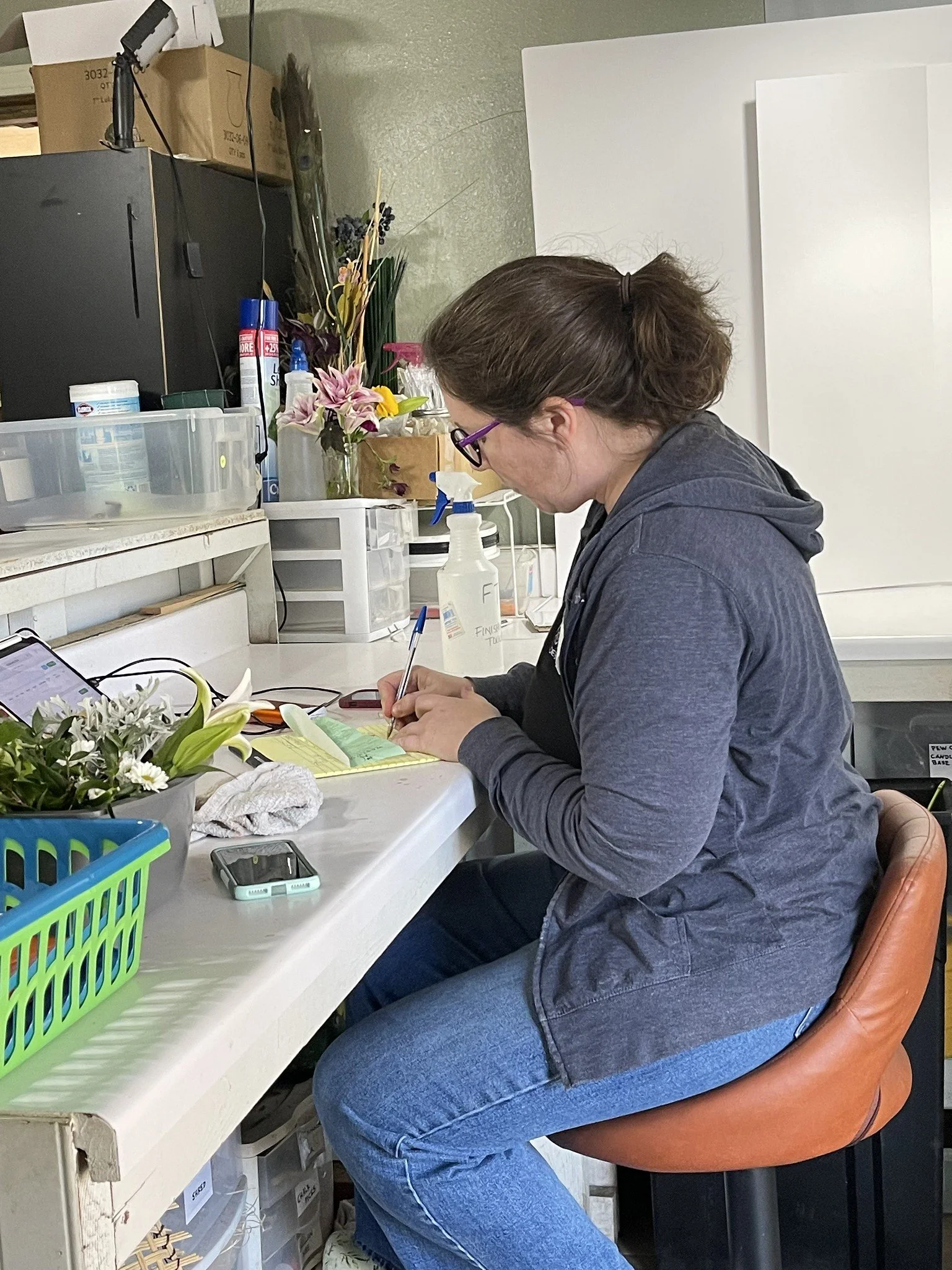
Have one person designated to route orders. This person will be responsible for creating the routes, making sure the correct arrangements are ready for each route, and the drivers know the route to take.
Set up a designated area (table, flattened box, painters tape on the floor) for each route. Completed orders go directly into their route spot, not just "somewhere in the cooler."
Remember: Same-day orders get tricky. The person routing needs to know what areas already have deliveries going out and whether there will be another route to that area later. If not, don't take the order. It's better to refer it out than to backtrack constantly and blow your schedule.
Your Checklist:
Set up routing system (POS, Google Maps, AI)
Create designated spots for each route
Assign someone to manage routing
Establish same-day order policy
Know your delivery zones and schedule
Have referral florist contacts ready
Driver-Runner Teams: Double Your Efficiency
If possible, pair drivers with runners. This is especially helpful for inexperienced help. The driver preps the next delivery while the runner is at the door. The runner can make calls while the driver handles navigation. No one's stuck finding parking or trying to carry three arrangements at once while locking the car.
If you can't do teams, recognize you'll need more drivers or fewer orders. Be realistic about capacity.
Your Checklist:
Check with your insurance about temporary driver coverage. Provide agent with all necessary information.
Pair drivers with runners if possible
Assign roles clearly (who navigates, who delivers)
Give delivery drivers a copy of the delivery instructions
Calculate realistic delivery capacity & cut off orders when at max capacity.
Adjust order volume if working solo
The Reality Check
These systems might feel rigid if you're used to winging it. But here's the thing: systems don't kill creativity. They protect your energy for the creative work that actually matters.
When you know exactly where orders are, how to price them, and how they're getting delivered, you're not wasting mental energy on logistics. You can focus on making beautiful work.
Next up: hiring help and learning to delegate. Because you can't do it all, and you shouldn't try.