
This Valentine’s arrangement is a great example of how design fundamentals create a composition that feels romantic, intentional, and easy on the eye. The color palette stays in a warm, cohesive family with pink, mauve and burgundy but is accented with fresh green (a complementary color) so the arrangement reads as unified first, then you begin to notice the individual details.
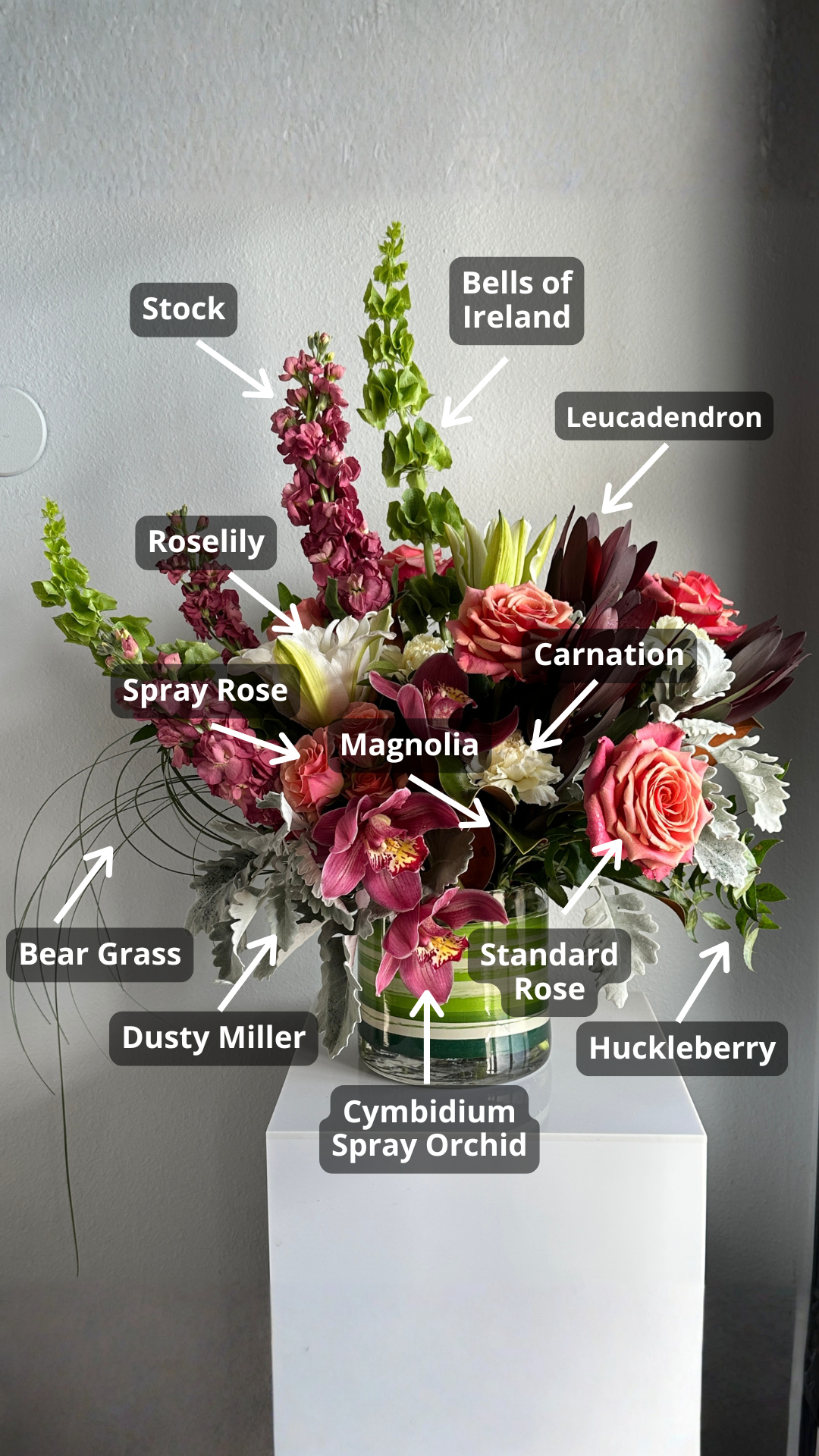
The structure is built around clear visual weight and proportion. Fuller focal blooms like standard roses, magnolia, and cymbidium orchids sit closer to the center and base, giving the design stability. Supporting these are spray roses and carnations, used to fill outward and create softness and dimension without competing for attention. Taller ingredients like Stock and Bells of Ireland extend the silhouette and create gentle movement that pulls the eye upward, adding rhythm to the overall shape.
Texture is what makes this recipe feel elevated. Velvety roses, ruffled carnations, sleek orchids, and the sculptural surface of magnolia all contrast each other in a controlled way. Dusty miller adds a cool, silvery note that balances the warmer blooms. Bear grass finishes the design with line and flow and showcases an element that adds energy while still keeping the arrangement elegant.
What’s In it
Stock
Leucadendron
Spray Rose
Carnation
Standard Rose
Cymbidium Spray Orchid
Bells of Ireland
Roselily
Huckleberry
Bear Grass
Dusty Miller
Magnolia
Design Tips
Keep your heaviest blooms low and centered, letting lighter blooms float above for movement.
Mix textures deliberately: velvety roses, sculptural magnolia, soft carnations, and silvery dusty miller create depth and interest.
Flowing elements like bear grass bring dynamic movement and keep the design feeling organic.