
Floral Recipe: French Compote Arrangement
A compote arrangement can look effortlessly luxurious, but the magic is almost always design. In this French-inspired piece created for our Fusion360 event in August 2025, every bloom is placed with purpose so the arrangement feels full, elevated, and easy on the eye. We will break down how the elements of design like line, form, space, texture, color, and size work together with principles like balance, proportion, rhythm, emphasis, harmony, and unity to create a composition that feels intentional from every angle.
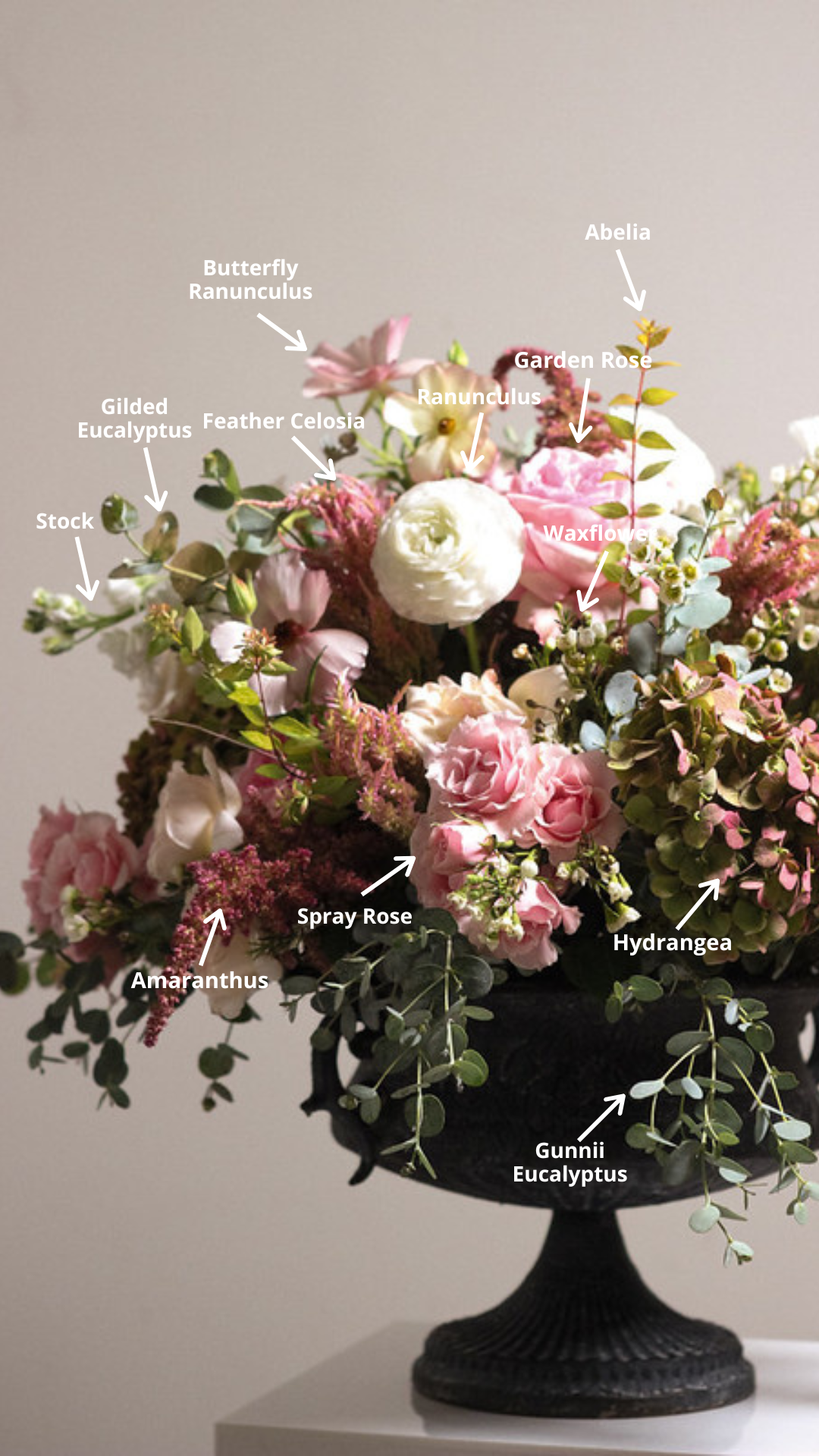
A beautiful arrangement is more than great flowers in a pretty vessel. What makes a compote feel high-end is the structure behind it. This recipe is a practical example of how design principles and elements guide placement so the final piece reads as cohesive, not crowded.
Elements of design to notice
Line: Amaranthus and feather celosia create a clear cascading direction that leads the eye through the arrangement.
Form: Hydrangea builds a rounded foundation while garden roses add strong focal shape and presence.
Space: Airier ingredients like stock and waxflower help create breathing room so the silhouette stays clean.
Texture + pattern: Soft petals (roses, ranunculus) contrast with plush celosia and structured foliage for depth and detail.
Color: A soft, muted palette keeps the focus on shape and texture, with gilded touches adding a refined highlight.
Size: Larger blooms anchor the center while medium and small blooms transition outward to keep the design readable.
Principles that make it work
Balance + proportion: The dense focal area counters the cascade so the arrangement feels stable and intentional.
Emphasis: Larger, heavier blooms hold the focal area so the eye knows where to land first.
Rhythm: Repeated shapes and textures guide the eye around the design instead of letting it stop abruptly.
Harmony + unity: The palette and textures stay cohesive so many ingredients still read as one composition.
What’s In it
Amaranthus
Ranunculus
Garden Roses
Feather Celosia
Waxflower
Butterfly Ranunculus
Abelia
Gunnii Eucalyptus
Gilded Eucalyptus
Hydrangeas
Stock
Spray Roses
Design Tips
Start with hydrangea to establish the base form and mechanics.
Place garden roses to define the focal area.
Add the cascade in one clear direction so it looks designed, not accidental.
Use waxflower and stock as transitions to keep the piece airy.
Repeat textures and foliage shapes to maintain unity.